
From Prototype to Production Run: What Actually Changes
The prototype worked, the customer said yes, and now you need two hundred of them. The drawing has not changed — but almost everything around it has.
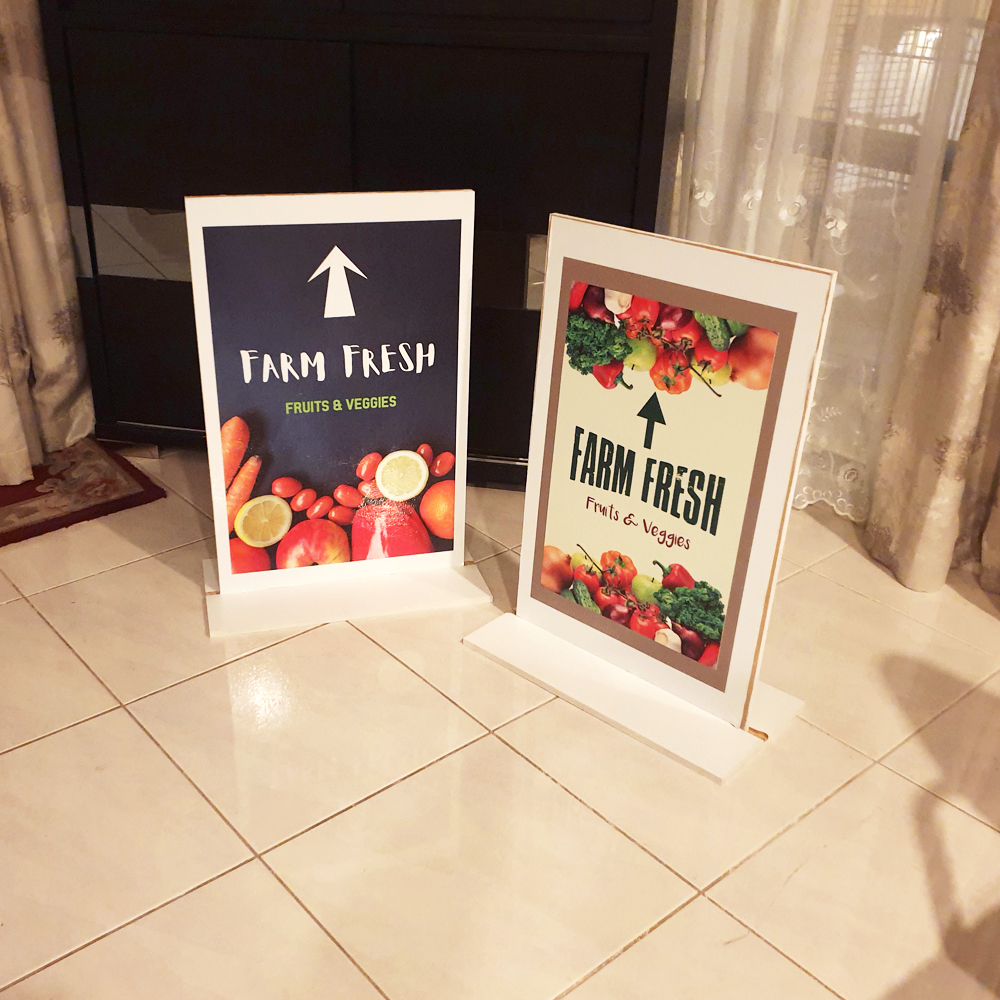
Making one of something is a craft problem. Making two hundred is a process problem. The moment a job crosses that line, the questions change — and if nobody asks them early, the run costs more and takes longer than it should have.
The Prototype Was Never Optimised, and That Was Fine
A one-off gets made the fastest way possible. It might be cut from an offcut, hand finished, assembled on the bench and adjusted as it goes. Nobody nests it for material yield because it is one part on one sheet.
None of that survives contact with a production run, and it should not. The prototype’s job was to prove the design. The run’s job is to reproduce it economically.
What Changes First: Nesting
On a single part, material cost is noise. On two hundred, it is often the biggest line in the quote.
Nesting is the business of arranging parts on a sheet so the least material ends up in the bin. A small change to a part — two millimetres off one dimension, a corner radius adjusted, a component rotated — can sometimes fit an extra part per sheet. Over a run, that is real money.
Fixturing Replaces Freehand
Any secondary operation done by eye on a prototype — drilling a hole, trimming an edge, positioning a bracket for bonding — needs a jig for a run. Otherwise consistency depends on whoever happens to be on the bench that day.
A jig costs something to make and then pays for itself across the batch by removing both the setup time and the variation. It is usually the single best investment in a production job.
Tolerance Stack Becomes Real
One prototype that assembles nicely proves the part can fit. It does not prove every part will fit.
Across a batch, dimensions vary within their tolerance band. If an assembly has five stacked components each allowed a small variation, the worst-case total can be considerably more than you expected from the individual numbers. Assemblies that were fine as a one-off can start binding at part number forty.
This is why we ask, on production work, which dimensions are critical — and why a first-off approval before the balance is cut is cheap insurance.
Finishing Has to Be Repeatable
Hand polishing one acrylic edge to perfection is enjoyable. Hand polishing four hundred is not, and the last one will not match the first.
For a run, finishing needs to be a defined process with an agreed standard: which edges get polished, to what level, and what is acceptable. Vague finishing expectations are the most common source of disagreement on production work, and they are entirely avoidable with one conversation.
Packing and Delivery Stop Being an Afterthought
A single part goes in the car. Two hundred parts need to be protected, stacked, labelled, palletised and shipped without the bottom ones being crushed or the printed faces scuffing against each other.
Decide early whether parts ship loose, interleaved, boxed in sets or in a single pallet, and whether you want them delivered in one go or released in batches as you need them.
What We Need to Quote a Run Properly
| Information | Why it matters |
|---|---|
| Total quantity | Drives nesting, setup amortisation and material buying |
| Release schedule | All at once, or in batches over months |
| Critical dimensions | Tells us where to control tolerance and where not to |
| Finish standard | Which surfaces and edges matter, and how much |
| Packaging | Loose, boxed, interleaved, palletised |
| Repeat likelihood | Justifies investing in jigs and better nesting |
How the Pricing Actually Behaves
Quantity discounts are not a courtesy. Setup, programming and nesting are largely fixed costs that get divided across the batch, so the per-part price genuinely falls as the run grows — steeply at first, then flattening once material dominates.
This is worth knowing when you are deciding between ordering fifty now or two hundred across the year. Ask for both numbers; sometimes ordering the full run and holding stock is materially cheaper, and sometimes it is not.
The Short Version
Treat the jump to production as a small design review, not just a bigger order. Talk about yield, jigs, critical dimensions, finish standard and packing before the first sheet is cut, and the run will be cheaper, faster and more consistent than the prototype suggested.
We handle single prototypes and repeat runs on the same machines, so the transition is a conversation rather than a change of supplier. See our services or send the job through.