
Precision Metal Fabrication: Where the Accuracy Actually Comes From
Everybody asks what tolerance we can hold. It is the wrong question on its own, because accuracy in a finished metal part is decided long before the cutter touches the sheet.
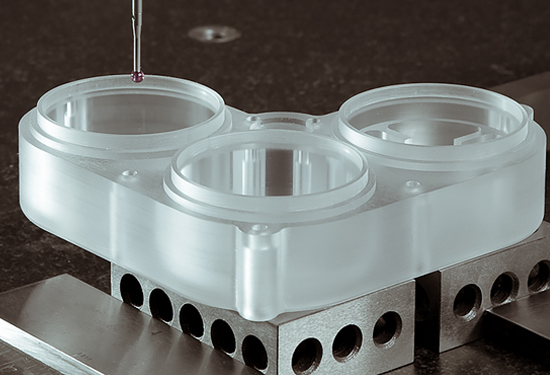
“Precision” is one of those words that has been used so hard in manufacturing marketing that it has stopped meaning much. Every workshop claims it. Very few will tell you what it costs, where it comes from, or which of your dimensions they are actually going to hold.
So here is the honest version, from a floor that cuts metal every week.
Tolerance Is a Decision, Not a Property
A part does not have a tolerance. A dimension has a tolerance, and every dimension you tighten adds cost — in setup, in checking, in scrap and sometimes in a slower process entirely.
The most useful thing a customer can do is mark which dimensions matter. Not all of them. Usually there are two or three features that have to fit something else, and thirty that just need to look right. When a drawing arrives with a blanket note reading ±0.1 mm on all dimensions, we have to quote as though every one of them is critical, and the number goes up for no benefit to anybody.
Where the Error Actually Creeps In
1. The Material Arrives Imperfect
Sheet metal is not flat. It comes off a coil, it has residual stress in it, and mild steel plate in particular can have a gentle bow across a two metre length. Cut a symmetrical part out of a stressed sheet and the offcut relaxes, which means the part you wanted moves after cutting. Nothing about the machine caused that.
Thickness varies too. A sheet sold as 3 mm may measure 2.8 mm in places. If your assembly stacks five of those together, the stack tolerance is now yours to worry about, not the mill’s.
2. Heat Moves Metal
Both laser and plasma cutting are thermal processes. They put localised heat into the edge of the cut and that heat has to go somewhere. On thin stainless the effect is small. On thicker plate, or on parts with lots of closely spaced holes, the accumulated heat can visibly distort a piece by the time the last feature is cut.
Managing this is ordinary workshop craft: sequencing the cut so heat is spread rather than concentrated, leaving parts tabbed into the sheet until the end, letting a piece cool before the next operation. It is not glamorous and it is most of the job.
3. The Part Is Only as Square as Its Fixture
Once a piece leaves the cutting bed and goes to a secondary operation — drilling, tapping, folding, assembly — it has to be held. Every time it is clamped, referenced or flipped, an opportunity for error is introduced. Parts that are machined from a single setup are inherently more accurate than parts that are handled four times.
4. Everything Is Measured From Somewhere
If a drawing dimensions each hole from the one before it, the errors add up along the row. If every hole is dimensioned from a single edge or a datum hole, they do not. This is free accuracy and it costs nothing but a few minutes of drawing discipline.
What Each Process Realistically Gives You
| Process | Typical use | Edge quality |
|---|---|---|
| Laser cutting | Thin to medium stainless, fine detail, visible edges | Square, clean, usually no dressing needed |
| Plasma cutting | Thicker mild steel and aluminium plate | Coarser, slight bevel, may need dressing |
| CNC routing | Plastics, panel, non-ferrous metal | Clean and consistent, finish depends on cutter |
Notice that none of those rows contains a number. That is deliberate. Anyone quoting you a single blanket tolerance figure without asking about your material and geometry is quoting a brochure, not your job.
How to Get an Accurate Part Without Paying for Accuracy You Do Not Need
- Say what it fits. “This bore takes a 25 mm bearing” is far more useful than a tolerance symbol on its own.
- Dimension from a datum. One reference edge, not a chain of relative measurements.
- Leave the non-critical features open. Give them a general tolerance and let the process do what it does well.
- Allow for finishing. Powder coat, anodising and plating all add thickness. If a hole must stay a certain size afterwards, say so.
- Ask for a first-off. On a production run, approving one finished part before the rest are cut is the cheapest insurance available.
The Short Version
Precision is not something you buy by choosing an expensive machine. It comes from choosing the right process for the material, controlling heat, minimising handling, referencing sensibly and being honest about which dimensions carry the load.
If you have a part that has to fit something, send the drawing through with a note about what it mates with. We will tell you what is achievable, what it will cost, and where we would suggest loosening things up to save you money. Have a look at our fabrication services or the processes we run if you want the detail first.