CNC routers and laser cutters are often discussed as interchangeable cutting tools. In practice, their cutting action, material compatibility and secondary capabilities are quite different. Understanding those differences makes quoting clearer and design decisions easier.
How CNC routing works
A CNC router uses a rotating cutting tool that follows programmed toolpaths. Different cutters can profile an outside shape, machine pockets, drill holes, chamfer edges or engrave a surface. It is particularly versatile for plastics, timber products, composites and non-ferrous sheet materials.
In the context of CNC Routing vs Laser Cutting: Which Process Fits Your Part?, how CNC routing works should be treated as a documented project decision rather than an assumption made after production begins. Start by defining what the finished item must do, where it will operate, who will handle it and what conditions it will face. Include the expected quantity, service life, appearance, cleaning routine and mounting method. These details give the fabricator enough context to compare options and explain any trade-offs before material or machine time is committed.
A useful specification connects this decision to measurable acceptance criteria. Dimensions, tolerances, surface condition, colour, edge quality and assembly requirements should be stated wherever they affect fit or performance. Separate essential requirements from preferences so the team knows where alternatives are possible. When a requirement cannot be measured directly, provide a reference sample, annotated image or clear description of the intended result. This reduces interpretation during quoting and creates a practical basis for checking the first completed part.
Consider the full production sequence, not only the operation described under how CNC routing works. Material ordering, cutting, machining, forming, printing, joining, finishing, packing and transport can each influence the result. A choice that appears efficient at one stage may create extra handling or rework later. Ask the fabricator to identify the controlling step, likely sources of variation and any features that require manual work. Reviewing the complete route helps balance unit cost, lead time, repeatability and finish instead of optimising one isolated process.
Risk is best managed with an appropriate sample or first-off inspection. The sample should test the uncertain parts of the design, such as fit, stiffness, visibility, edge treatment, fastening or exposure to normal use. Agree in advance which observations will trigger a design change and which are acceptable characteristics of the selected process. Record the approved result with photographs, measurements and revision details. For repeat orders, this reference makes it easier to distinguish a genuine defect from normal variation and prevents old decisions from being reopened.
Before approval, confirm responsibility for drawings, material substitutions, compliance checks and final sign-off. Keep comments against a single controlled revision and close every unresolved note before release. If the project changes, assess the effect on tooling, nesting, programming, stock and delivery rather than updating one dimension in isolation. This discipline is especially valuable for CNC Routing vs Laser Cutting: Which Process Fits Your Part? because small undocumented changes can alter cost or performance. A short review at this stage is usually faster and less expensive than correcting completed components.
How laser cutting works
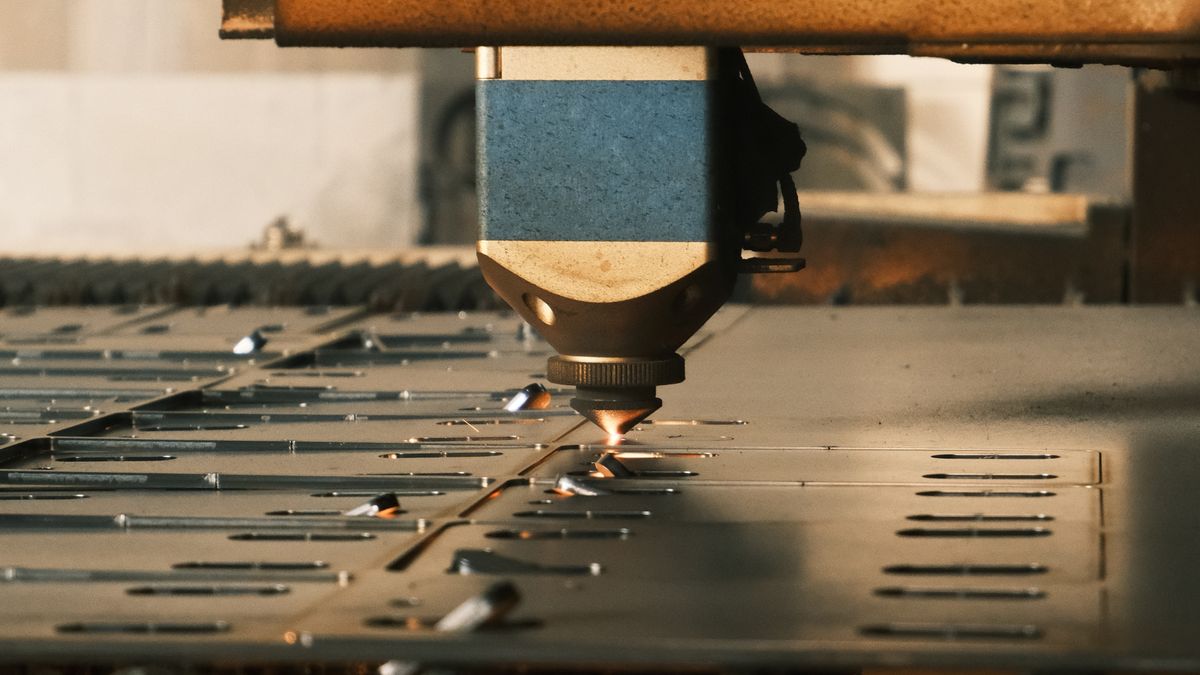
A laser concentrates energy into a narrow beam to cut a programmed profile without physical tool contact. It can create fine features and repeatable contours in compatible sheet materials. Material type, thickness and heat response determine whether laser cutting is appropriate.
In the context of CNC Routing vs Laser Cutting: Which Process Fits Your Part?, how laser cutting works should be treated as a documented project decision rather than an assumption made after production begins. Start by defining what the finished item must do, where it will operate, who will handle it and what conditions it will face. Include the expected quantity, service life, appearance, cleaning routine and mounting method. These details give the fabricator enough context to compare options and explain any trade-offs before material or machine time is committed.
A useful specification connects this decision to measurable acceptance criteria. Dimensions, tolerances, surface condition, colour, edge quality and assembly requirements should be stated wherever they affect fit or performance. Separate essential requirements from preferences so the team knows where alternatives are possible. When a requirement cannot be measured directly, provide a reference sample, annotated image or clear description of the intended result. This reduces interpretation during quoting and creates a practical basis for checking the first completed part.
Consider the full production sequence, not only the operation described under how laser cutting works. Material ordering, cutting, machining, forming, printing, joining, finishing, packing and transport can each influence the result. A choice that appears efficient at one stage may create extra handling or rework later. Ask the fabricator to identify the controlling step, likely sources of variation and any features that require manual work. Reviewing the complete route helps balance unit cost, lead time, repeatability and finish instead of optimising one isolated process.
Risk is best managed with an appropriate sample or first-off inspection. The sample should test the uncertain parts of the design, such as fit, stiffness, visibility, edge treatment, fastening or exposure to normal use. Agree in advance which observations will trigger a design change and which are acceptable characteristics of the selected process. Record the approved result with photographs, measurements and revision details. For repeat orders, this reference makes it easier to distinguish a genuine defect from normal variation and prevents old decisions from being reopened.
Before approval, confirm responsibility for drawings, material substitutions, compliance checks and final sign-off. Keep comments against a single controlled revision and close every unresolved note before release. If the project changes, assess the effect on tooling, nesting, programming, stock and delivery rather than updating one dimension in isolation. This discipline is especially valuable for CNC Routing vs Laser Cutting: Which Process Fits Your Part? because small undocumented changes can alter cost or performance. A short review at this stage is usually faster and less expensive than correcting completed components.
Compare the edge
Routing leaves a mechanically cut edge whose finish depends on cutter geometry, feed rate, spindle speed and material. Laser cutting creates a heat-affected edge. The desired appearance, bonding method and post-processing requirements should guide the decision.
In the context of CNC Routing vs Laser Cutting: Which Process Fits Your Part?, compare the edge should be treated as a documented project decision rather than an assumption made after production begins. Start by defining what the finished item must do, where it will operate, who will handle it and what conditions it will face. Include the expected quantity, service life, appearance, cleaning routine and mounting method. These details give the fabricator enough context to compare options and explain any trade-offs before material or machine time is committed.
A useful specification connects this decision to measurable acceptance criteria. Dimensions, tolerances, surface condition, colour, edge quality and assembly requirements should be stated wherever they affect fit or performance. Separate essential requirements from preferences so the team knows where alternatives are possible. When a requirement cannot be measured directly, provide a reference sample, annotated image or clear description of the intended result. This reduces interpretation during quoting and creates a practical basis for checking the first completed part.
Consider the full production sequence, not only the operation described under compare the edge. Material ordering, cutting, machining, forming, printing, joining, finishing, packing and transport can each influence the result. A choice that appears efficient at one stage may create extra handling or rework later. Ask the fabricator to identify the controlling step, likely sources of variation and any features that require manual work. Reviewing the complete route helps balance unit cost, lead time, repeatability and finish instead of optimising one isolated process.
Risk is best managed with an appropriate sample or first-off inspection. The sample should test the uncertain parts of the design, such as fit, stiffness, visibility, edge treatment, fastening or exposure to normal use. Agree in advance which observations will trigger a design change and which are acceptable characteristics of the selected process. Record the approved result with photographs, measurements and revision details. For repeat orders, this reference makes it easier to distinguish a genuine defect from normal variation and prevents old decisions from being reopened.
Before approval, confirm responsibility for drawings, material substitutions, compliance checks and final sign-off. Keep comments against a single controlled revision and close every unresolved note before release. If the project changes, assess the effect on tooling, nesting, programming, stock and delivery rather than updating one dimension in isolation. This discipline is especially valuable for CNC Routing vs Laser Cutting: Which Process Fits Your Part? because small undocumented changes can alter cost or performance. A short review at this stage is usually faster and less expensive than correcting completed components.
Look beyond the outline
If a component needs pockets, countersinks, rebates or controlled-depth features, routing may complete several operations in one setup. If the design is primarily a detailed two-dimensional profile with close internal features, laser cutting may be the efficient option.
In the context of CNC Routing vs Laser Cutting: Which Process Fits Your Part?, look beyond the outline should be treated as a documented project decision rather than an assumption made after production begins. Start by defining what the finished item must do, where it will operate, who will handle it and what conditions it will face. Include the expected quantity, service life, appearance, cleaning routine and mounting method. These details give the fabricator enough context to compare options and explain any trade-offs before material or machine time is committed.
A useful specification connects this decision to measurable acceptance criteria. Dimensions, tolerances, surface condition, colour, edge quality and assembly requirements should be stated wherever they affect fit or performance. Separate essential requirements from preferences so the team knows where alternatives are possible. When a requirement cannot be measured directly, provide a reference sample, annotated image or clear description of the intended result. This reduces interpretation during quoting and creates a practical basis for checking the first completed part.
Consider the full production sequence, not only the operation described under look beyond the outline. Material ordering, cutting, machining, forming, printing, joining, finishing, packing and transport can each influence the result. A choice that appears efficient at one stage may create extra handling or rework later. Ask the fabricator to identify the controlling step, likely sources of variation and any features that require manual work. Reviewing the complete route helps balance unit cost, lead time, repeatability and finish instead of optimising one isolated process.
Risk is best managed with an appropriate sample or first-off inspection. The sample should test the uncertain parts of the design, such as fit, stiffness, visibility, edge treatment, fastening or exposure to normal use. Agree in advance which observations will trigger a design change and which are acceptable characteristics of the selected process. Record the approved result with photographs, measurements and revision details. For repeat orders, this reference makes it easier to distinguish a genuine defect from normal variation and prevents old decisions from being reopened.
Before approval, confirm responsibility for drawings, material substitutions, compliance checks and final sign-off. Keep comments against a single controlled revision and close every unresolved note before release. If the project changes, assess the effect on tooling, nesting, programming, stock and delivery rather than updating one dimension in isolation. This discipline is especially valuable for CNC Routing vs Laser Cutting: Which Process Fits Your Part? because small undocumented changes can alter cost or performance. A short review at this stage is usually faster and less expensive than correcting completed components.
Ask for a process review
Send the native vector or CAD file with material and thickness. A fabricator can assess minimum feature size, internal corner expectations, hold-down strategy and nesting. Small design changes often unlock a faster, cleaner production route.
In the context of CNC Routing vs Laser Cutting: Which Process Fits Your Part?, ask for a process review should be treated as a documented project decision rather than an assumption made after production begins. Start by defining what the finished item must do, where it will operate, who will handle it and what conditions it will face. Include the expected quantity, service life, appearance, cleaning routine and mounting method. These details give the fabricator enough context to compare options and explain any trade-offs before material or machine time is committed.
A useful specification connects this decision to measurable acceptance criteria. Dimensions, tolerances, surface condition, colour, edge quality and assembly requirements should be stated wherever they affect fit or performance. Separate essential requirements from preferences so the team knows where alternatives are possible. When a requirement cannot be measured directly, provide a reference sample, annotated image or clear description of the intended result. This reduces interpretation during quoting and creates a practical basis for checking the first completed part.
Consider the full production sequence, not only the operation described under ask for a process review. Material ordering, cutting, machining, forming, printing, joining, finishing, packing and transport can each influence the result. A choice that appears efficient at one stage may create extra handling or rework later. Ask the fabricator to identify the controlling step, likely sources of variation and any features that require manual work. Reviewing the complete route helps balance unit cost, lead time, repeatability and finish instead of optimising one isolated process.
Risk is best managed with an appropriate sample or first-off inspection. The sample should test the uncertain parts of the design, such as fit, stiffness, visibility, edge treatment, fastening or exposure to normal use. Agree in advance which observations will trigger a design change and which are acceptable characteristics of the selected process. Record the approved result with photographs, measurements and revision details. For repeat orders, this reference makes it easier to distinguish a genuine defect from normal variation and prevents old decisions from being reopened.
Before approval, confirm responsibility for drawings, material substitutions, compliance checks and final sign-off. Keep comments against a single controlled revision and close every unresolved note before release. If the project changes, assess the effect on tooling, nesting, programming, stock and delivery rather than updating one dimension in isolation. This discipline is especially valuable for CNC Routing vs Laser Cutting: Which Process Fits Your Part? because small undocumented changes can alter cost or performance. A short review at this stage is usually faster and less expensive than correcting completed components.
Information to prepare
Use these points to start a clearer conversation with your fabrication partner.
- Compatible material
- Sheet thickness
- Minimum feature size
- Edge expectation
- Depth features
- Production quantity
KEY TAKEAWAYThere is no universal winner. CNC routing offers mechanical versatility and depth control; laser cutting offers contact-free profiling and fine detail in suitable materials.
Important: This article provides general educational information. Project requirements, safety obligations and applicable standards should be reviewed by suitably qualified professionals.